
if you love cooking but hate your kitchen setup, here are 21
kitchen tools
worth your attention this prime day
A lot of cooking frustration is infrastructure, not technique. Here are 21 kitchen tools designed to fix that gap.
These span kitchen storage, organization, and prep—the infrastructure that either enables cooking or creates friction. Each one picked for the setup problem it addresses.

Instant Pot Duo Crisp
The thing reviewers keep noting isn’t the eleven functions — it’s that everything comes out in under an hour and there’s one dish to wash.
The two-lid architecture is worth understanding before you buy. One lid pressure cooks; the other air fries. The inner pot itself is stainless 18/8 with a tri-ply bottom, which means it can go directly on the stovetop — a spec detail the listing buries but that changes what the thing actually is. The reviewer pattern for meal prep and family-scale cooking is consistent: quick turnaround, versatile enough to cover most of the week’s cooking, and the cleanup story appears to check out — one pot, both lids dishwasher-safe. The honest flags from the reviews: the 8-quart is genuinely large, and several buyers note it’s too much pot for solo cooking. A separate thread of durability complaints — dented units on arrival — comes up often enough to mention.

OXO POP Pantry Canister
A pantry canister where the sealing button and the opening handle are the same piece — which sounds obvious until you compare it to everything else in the category.
One press creates the airtight seal; the same button lifts to open. It sounds like a minor detail, but most competitors split those two actions, and the unified mechanism shows up as a recurring note in a heavily reviewed category. Worth flagging because the category is full of lids that require both hands and a small amount of resentment. The 4.4-quart size is calibrated to hold around five pounds of flour, sugar, or pasta — roughly a standard bag of each. There is also a built-in fill line and curved corners for smooth dispensing, the kind of specifics that suggest someone thought through the daily-use case beyond just the close-and-open. The honest note: durability is split. A meaningful share of buyers report years of reliable use; others flag lid issues in the first few weeks. The seal gets similar feedback — tight for most, inconsistent for a notable share. Worth knowing before outfitting an entire pantry at once.
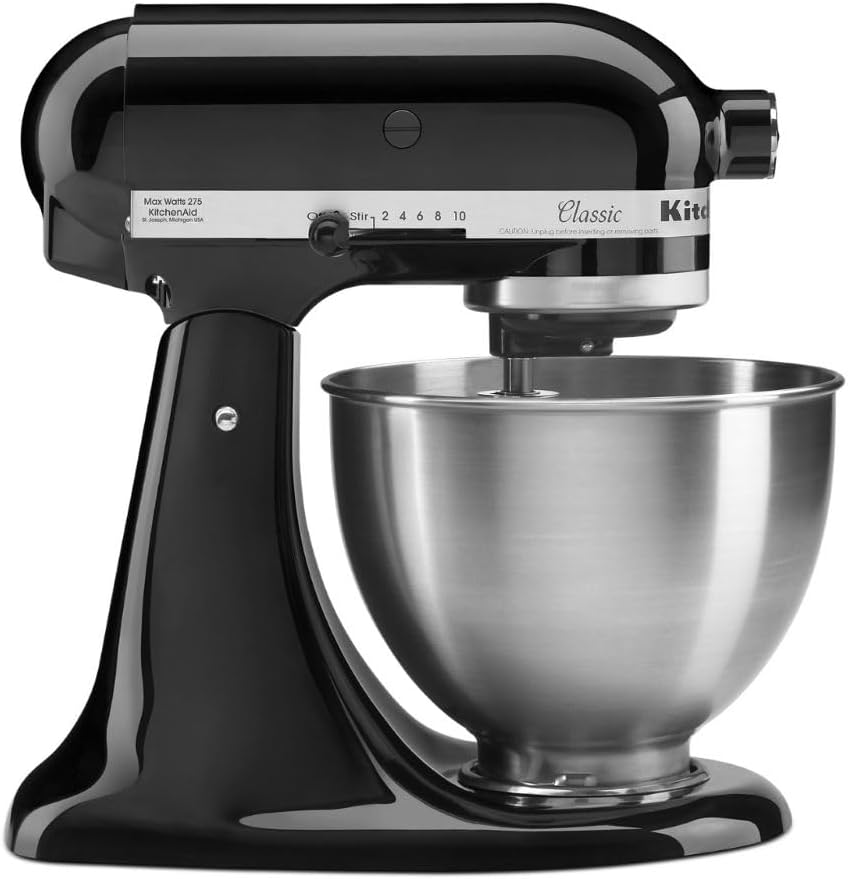
KitchenAid Classic Tilt-Head Mixer
The dough hook and the beater get their own sentence in most reviews — not the machine, the attachments.
Stand mixer reviews tend to collapse into two camps: the people who waited too long to buy one, and the people who wish they had bought a bigger model. This one sits squarely in the first camp. A heavily reviewed pick where the dough hook earns repeat mention — reviewers come back to bread prep specifically, and the beater gets credited alongside it. Spec-wise: 59 touchpoints around the bowl, a tilt-head that locks for mixing and opens for adding ingredients, three pieces included — a coated flat beater, a coated dough hook, and a six-wire whip. Capacity is 4.5 quarts, rated for up to eight dozen cookies per batch. The honest note in the review pattern: durability feedback splits. Some owners describe years of reliable performance; others flag issues. Not a disqualifier, but a real thread.
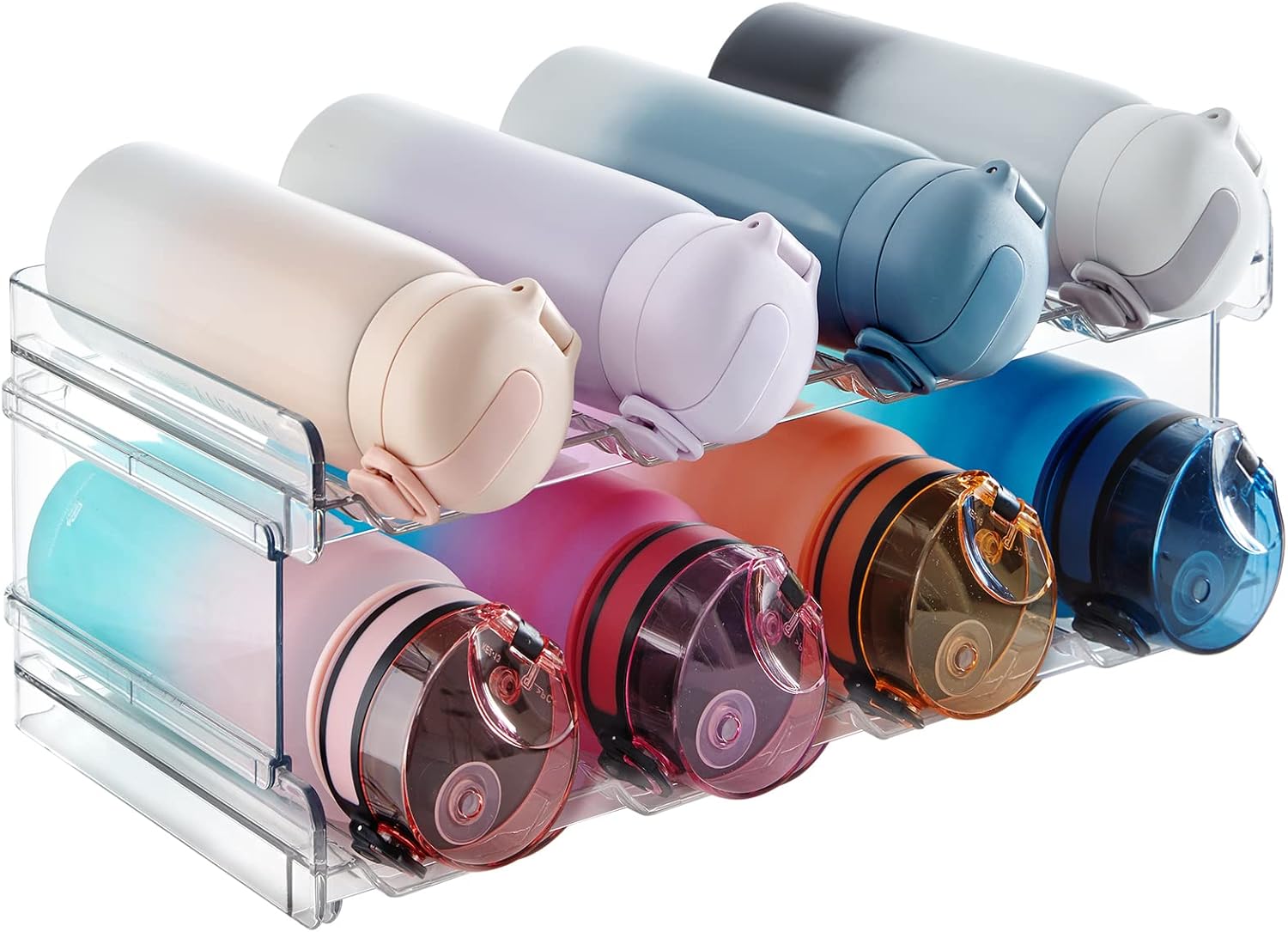
Two-Tier Bottle Rack
The water bottle cabinet situation has a solution, and it assembles in under fifteen seconds.
It’s two plastic shelves that stack, each holding four bottles in channels designed to keep them from rolling or colliding with each other. The assembly detail that keeps appearing in buyer feedback is the snap-together construction — no tools, under fifteen seconds, a note that feels minor until you’ve assembled other organizers. Sized to fit Hydro Flasks and Owala bottles, which are the two sizes that never quite fit anything. The whole unit can also go inside the refrigerator — a use case called out in the product copy that buyers seem to actually put to work. One note worth passing along: hand-wash only. The material is shatterproof PET, which is fine, but the dishwasher is explicitly off the table.

Snapware 5-Pack Food Containers
Five identical meal-prep containers with a write-and-erase label built into each lid — which changes from a nice touch to an actual system the moment all five are stacked in a fridge.
The write-and-erase label is built into the lid, not applied as a sticker — a detail the listing mentions almost as an afterthought, after the airtight tabs and the BPA-free specs. It matters more when you have five of them than when you have one. The 3-cup size is the useful part: buyers specifically flag it for individual lunch portions and single-serve freezer packs. Four locking tabs, one per corner, create the seal. Dishwasher, microwave, and freezer clearance on all parts. The honest note from the aggregate feedback: lid-snap reliability is not unanimous — some buyers flag the tabs loosening after repeated dishwasher runs. A small but real flag for daily-dishwasher households.

Pyrex Glass Measuring Set
A measuring cup you can also microwave is a small but real collapse of steps — and the glass version, for what these cost, is the honest call.
Pyrex has been the default name in glass prepware long enough that picking up a pair feels less like a decision and more like restocking. The design detail worth noting: markings printed large, in red, in both ounces and milliliters — useful when a recipe switches units mid-step. The glass being microwave-safe is more functional than it first appears. Melting butter or chocolate directly in the cup is the obvious move — one less bowl to dirty, and you measure and heat in the same vessel. The honest trade-off: glass breaks. Plastic measuring cups are lighter and cheaper, and if you fumble things in the sink, that matters. What glass gives you — in this case, tempered — is that it won’t absorb odors or stains over time. For a tool that lives in the drawer for a decade, that’s the better math.

BLACK+DECKER Extra-Tall Can Opener
An electric can opener that also sharpens knives and removes pop-tops — the three-in-one resume being the unexpected part.
Electric can openers have largely converged on one design: counter-side unit, blade, lever. Most do fine on standard cans and develop opinions about anything taller. This one is marketed as extra tall, with a wide profile meant to accommodate the can sizes that narrow openers tend to fumble. The less-obvious part is what else comes in the box. There’s a built-in knife sharpener and a multi-tool for bottle caps and pop-tops — making this a three-function countertop appliance for a price that sits well under the average for this class. Whether the knife sharpener does anything useful is an open question. It’s included; that’s all the copy says. The EasyCut blade is named. The brand behind it is established. For something with this many ratings behind it, the base function is presumably not the question.

Clear Spinning Organizer 4-Pack
Four clear turntables that, according to the review pool, end up in refrigerators almost as often as they end up in cabinets
Sturdy and smooth-spinning are the two descriptors that come up repeatedly across the review pool — which, for plastic turntables in this price range, is the relevant signal. They hold large oil containers without wobbling, the clear walls make the contents readable from across the shelf, and the high rim keeps things from sliding during rotation. The surprise, for many who order them, appears to be the refrigerator application. Spice racks and vanity trays are the obvious use case — but a meaningful share of the review pattern lands in the fridge, treating them as a way to bring rotating access to shelves where things typically get pushed to the back. One practical note: hand-wash only, not for hot water. And at 11.5 inches across, confirming cabinet dimensions before ordering is worth the step.

Ninestars Oval Motion Sensor Can
The oval footprint and fingerprint-resistant steel are the easy sell — the motion sensor is the variable the listing can’t predict for you.
There’s a certain type of kitchen can that signals a small domestic upgrade: stainless steel, oval rather than round, sensor-activated so nothing requires contact. This is that can. The fingerprint-resistant finish and removable liner ring — which hides the bag edge so the inside of the rim stays clean — are the details that earn the price tag in normal circumstances. The caveat comes from Amazon’s own aggregated rating summary, which flags the motion sensor as genuinely split: some owners report it working reliably, others report it failing within a year or refusing to trigger half the time. The same summary notes a durability range that runs from units lasting over a decade to units that broke early. For a trash can in the triple digits, that spread is worth naming. The one-touch manual lock — designed for meal prep, for when you’re moving fast and don’t want the lid cycling — is a real use feature. The oval footprint tucks against a cabinet edge. The lid is reported to seal well enough to matter.

DABIGE Pull-Out Spice Rack
A pull-out spice rack that keeps getting cited for one unexpected use: the medicine cabinet.
Pull-out cabinet organizers tend to advertise the slide and bury the fit requirements. This one buries neither — the listing opens with a cabinet-clearance warning before it gets to the product, which is the kind of small editorial choice that earns some trust. The dimensions are specific: twelve inches high, eleven deep, five wide, minimum. What gets flagged consistently in the feedback is the slide mechanism. Ball bearing rails, smooth under a full load — the two-tier setup holds ten small jars per shelf, guardrails keep jars from tipping mid-pull, and the metal hardware is described as solid under use. One note worth surfacing: the fit dimensions apparently make this work in medicine cabinets, too. The listing doesn’t anticipate that use. The feedback does.

Tysonir 15-Inch Magnetic Knife Strip
A wall-mounted knife strip in the under-ten-dollar range, where the gap between the strong version and the weak version is invisible until the knives hit the floor.
The 15-inch length holds a full set without crowding — longer than most standard blocks. The magnets are advertised as neodymium, which is the right word to see in a strip at this size. It ships with both screws and self-adhesive hooks — a practical detail for renters, or anyone with a wall that doesn’t want to be drilled. The split worth flagging is wider than it usually is at this size range: a meaningful share find the hold genuinely strong; others say it falls short and describe the plastic housing as brittle. Worth factoring in if the heavier blades are going up.

Kitsure Over-Sink Drying Rack
Over-sink racks tend to feel improvised; this one comes with a dedicated knife slot, a cutting board holder, and five hooks, which suggests someone thought it through.
The detail worth surfacing: owners load this well past what the frame looks capable of carrying, and five pots comes up as a load test in the aggregated write-ups. For something that lives above your drain on four suction cups, that is the number that matters. The two tiers divide into a specific accessory roster — three baskets, a utensil holder, a knife slot, a cutting board holder, and five hooks. Width spans a real range to fit single or double sinks. Excess water drains straight down into the sink rather than onto the counter, which is the whole argument for this format over a countertop rack. The caveat worth reading before ordering: faucet height has a ceiling of 21 inches, and the specs make clear this is not a suggestion. Measure before you commit.

Searon Mechanical Wind-Up Timer
Wind-up kitchen timers occupy a small, contrarian niche — this one adds a magnetic back and a durability record worth knowing going in.
Wind-up timers have a small, devoted following. The appeal is the simplicity: no charging, no dead-battery moment mid-boil, no screen. This one sticks to the fridge door via a magnet, which keeps it visible while you work. The mechanical bell is audible from another room, which is the core value proposition. There is a setup step built into the dial: wind clockwise to the 55-60 mark first, then dial back to your target time. It matters — the manufacturer flags this as the key to consistent accuracy, and skipping it is where most timing problems start. What comes up repeatedly in owner accounts: durability is genuinely uneven. A portion describe it lasting less than a year — some considerably less. For under ten dollars, that is worth weighing against the no-battery convenience.

SpaceAid Bamboo Drawer Dividers
Drawer dividers fail in one specific way — they drift — and these address it with a spring-loaded mechanism that, for most owners, actually holds.
What comes up repeatedly in the purchaser notes is an install that takes minutes — the spring-loaded ends press against the drawer wall without tools, and the non-slip rubber pads on the tips keep them fixed. No adhesive, no hardware. The sorting-by-outfit use case appears more than once, which is a specific way to use a drawer divider that most organizers don’t enable well. The bamboo finish reads as wood rather than veneer — an unusual material choice in a space full of plastic and MDF. The divided verdict worth flagging: some owners find the flex acceptable for a spring-loaded design; others call them flimsy. Where you land seems to depend on how tightly they expand against the wall.

Rotating Ceramic Utensil Crock
The rotating base is doing real work here, not just looking good on the counter.
The spin is not decorative. A ceramic crock with a 360° rotating wooden base reads as an aesthetic purchase — and it partly is — but the rotation has a practical argument: reach the ladle on the far side without upending the whole arrangement. Customers keep noting it works particularly well in smaller kitchens, which tracks — the sweep means nothing has to get shoved to the back. The body is ceramic, the base is wood, and the finish is Arctic White. The combination reads farmhouse-adjacent without committing to the theme, and the opening accommodates a full assortment without crowding, per the same cluster of customer notes. At 7.3 inches in diameter, this occupies real countertop presence — not a complaint, just the tradeoff the crock makes for the capacity it offers. Sized to do the job.
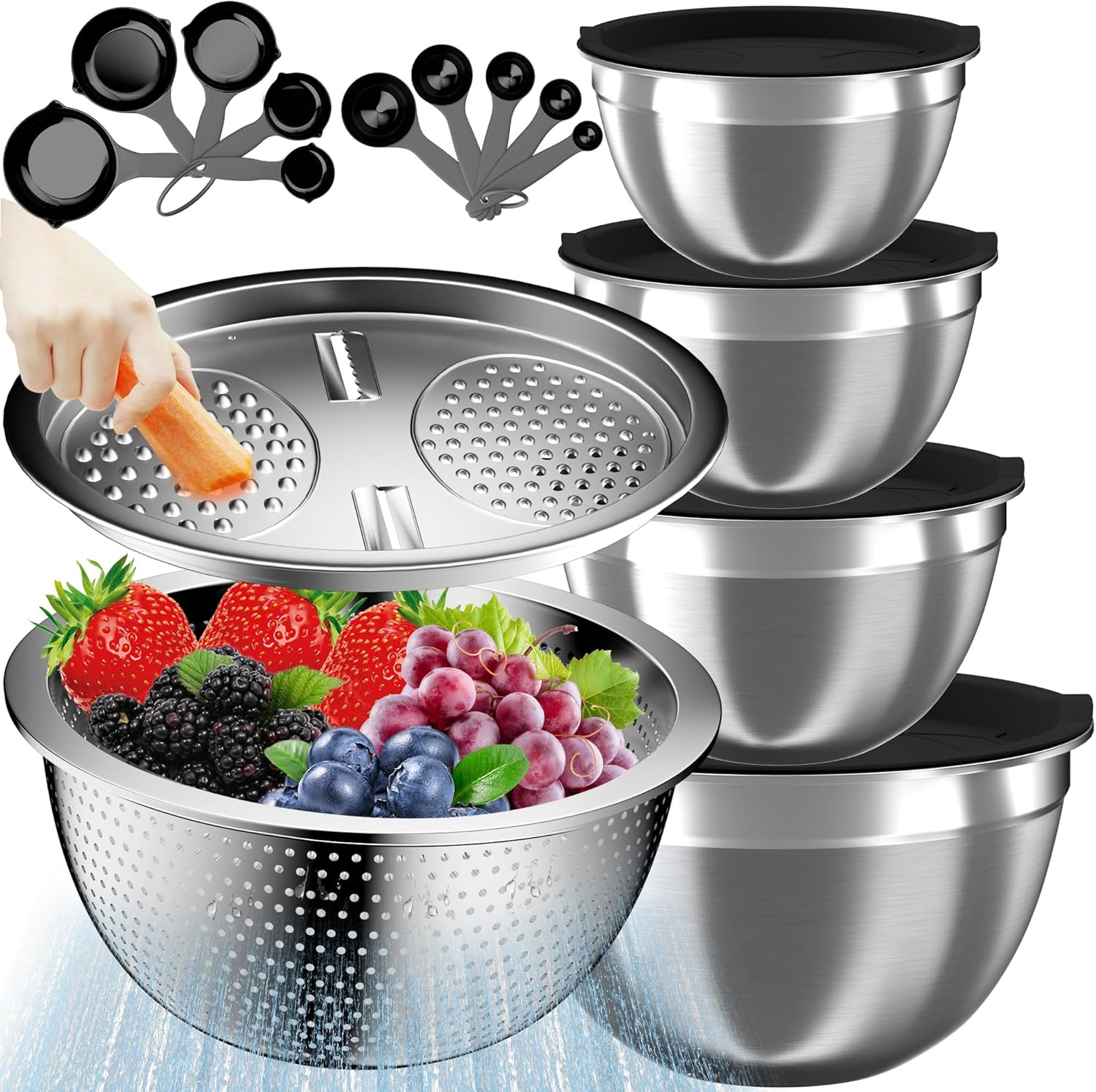
Nicdiet Stainless Nesting Bowl Set
The interesting engineering in this 16-piece nesting set is not the bowls — it is the grater attachment, which sits over the rim so shredded prep lands directly where it needs to be.
Apparently the grater-over-bowl design is the detail that makes this set work differently than the typical nesting-bowl stack. Four bowls (five-quart down to one-and-a-half-quart), a colander, and a four-in-one grater attachment — the last of which fits directly over the bowl rim, so prep goes straight in with no intermediate vessel. Worth flagging: the lids are marketed as airtight, and multiple customers note that they are not, in practice. The seal exists; it just does not hold for liquid-adjacent storage. Lids are also hand-wash only — they warp on the top rack. Well-suited to someone outfitting a kitchen from scratch, or as a gift that covers a lot of range and does not ask for brand loyalty. The grater and colander are the actual value-adds here; the lids are a bonus, not a promise.

Farmhouse Countertop Compost Bin
The farmhouse print is the obvious sell; the one-piece molded construction, no weld seams, is the quieter argument.
Molded in one piece — no welds, no seam where rust and leaks tend to start. The brand calls this out plainly: welded bins fail at the seam, and this one is designed around that failure mode. In a container that holds wet organic waste for days at a stretch, that is worth noting. Three charcoal filters come in the box: one installed, two spares, each rated to last a few months. The airtight lid handles most of the odor work; the filter handles the rest. The countertop-forward design — white, farmhouse-printed, visible — means it sits openly on the counter rather than tucked away, which is either a feature or a stylistic commitment depending on your kitchen. Two notes from the less enthusiastic end: paint chipping appears in more than a few responses, and the lid reportedly grows harder to remove with extended use. First-time composters are mentioned warmly and often on the positive end — it reads like a genuinely low-threshold way to start the habit.

KUAIVO Dual Platform Scale
A kitchen scale with two separate weighing surfaces — one calibrated for bulk, one for precision — which is not the obvious solution to a problem most scales quietly ignore.
Two platforms, one chassis: a large surface for bulk (up to 33lbs, 0.1oz resolution) and a small surface for precision work (down to 0.001oz resolution). Most scales make you choose. This one doesn’t. The sourdough use case is genuine — the title leads with it, and the accumulation feature (sum weights from both platforms, no clearing needed) is exactly the kind of shortcut that reduces errors in long builds. Seven unit modes include a dedicated milk milliliter setting, which is either unnecessary or very thoughtful depending on what you’re making. The one knock worth flagging: the auto-off triggers on the fast side, which is good for the power draw and less good mid-recipe when you’ve stepped away.

Modular Organizer Tray System
A hundred trays in six sizes for around forty dollars, and the size range is doing the actual work
Modular organizer sets live or die on the size spread. This one runs from a 3×3-inch square up to a 15×6-inch trough — the small end holds loose screws, the wide end fits combination wrenches. Six sizes, tiered to cover a tool chest or desk end to end. The interlocking mechanism is the main pitch: trays connect end-to-end and side-to-side to configure around whatever space you are working in. The note that comes up in the aggregate is that the size variety is unusual for the price point. Worth flagging: the interlocking feature draws mixed marks. It works in some arrangements and reportedly less so in others, and the assembled grid is not consistently described as rigid under weight. Individual trays appear to be the more reliable unit.

Matte Black Split-Mount Towel Bar
A matte black towel bar in 304 stainless, at a price where you’d normally expect plastic endcaps.
The catch, according to those who’ve installed it: the mounting process is genuinely fiddly for some. There’s a red alignment label you’re supposed to align into a straight line, then secure to the wall — which either clicks into place or requires patience. The stability complaints are real, and worth flagging. What holds up past the installation: the finish and the tube itself. The matte black consistently gets called out as looking more expensive than the price suggests, and the 304 stainless at 0.8-inch tube thickness is a spec worth noting — the kind of number that separates a rod that flexes from one that doesn’t. The 3-inch wall clearance was designed for airflow. At this price point, that level of intentional detailing is unusual.
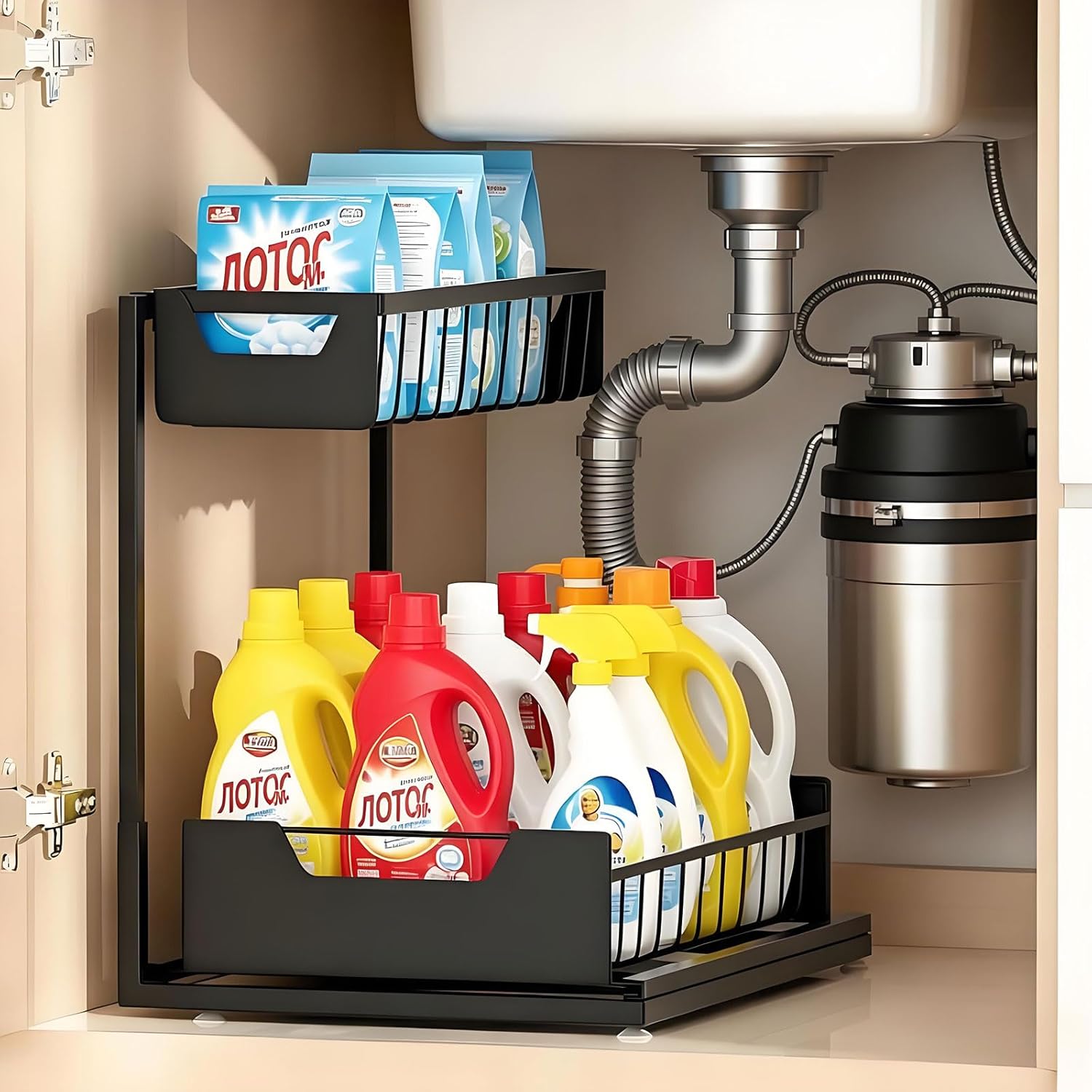
Pull-Out Under-Sink Rack
The L-shaped layout is a deliberate design call: it routes past the pipes instead of pretending they aren’t there.
There is a specific, persistent problem with under-sink storage, and this rack’s answer is structural. The L-shaped configuration routes past the plumbing and claims the space a straight rack gives up — the area that usually ends up empty or occupied by something that fell over. No tools needed to assemble. Wipes clean. The lower shelf slides out, which is the part worth noting: access to the items pushed to the back, no contortion required. The upper tier handles sponges, gloves, the smaller items that otherwise drift into a pile. One flag worth surfacing: the suction cups are a point of contention. A meaningful number of purchasers find them non-functional, with the unit appearing to hold position via weight rather than adhesion. It also runs smaller than the photos suggest — worth confirming the fit in your space.
One Comment
Comments are closed.